


日本藤素
All posts by admin26
Hernias
- Lap inguinal hernias威而鋼
repair - Lap ventral Hernias repair

Surgery for portal hypertension
What is portal hypertension?
Portal hypertension is an increase in the pressure within the portal vein (the vein that carries blood from the digestive organs to the liver). The increase in pressure is caused by a blockage in the blood flow through the liver.
Increased pressure in the portal vein causes large veins (varices) to develop across the esophagus and stomach to get around the blockage. The varices become fragile and can bleed easily.
What causes portal hypertension?
The most common cause of portal hypertension is cirrhosis, or scarring of the liver. Cirrhosis results from the healing of a liver injury caused by hepatitis, alcohol abuse, or other causes of liver damage. In cirrhosis, the scar tissue blocks the flow of blood through the liver and slows its processing functions.
Portal hypertension may also be caused by thrombosis, or a blood clot that develops in the portal vein.
What are the symptoms of portal hypertension?
The onset of portal hypertension may not always be associated with specific symptoms that identify what is happening in the liver. But if you have liver disease that leads to cirrhosis, the chance of developing portal hypertension is high.
The main symptoms and complications of portal hypertension include:
Gastrointestinal bleeding: black, tarry stools or blood in the stools; or vomiting of blood due to樂威壯
the spontaneous rupture and bleeding from varices.
Ascites: an accumulation of fluid in the abdomen.
Encephalopathy: confusion and forgetfulness caused by poor liver function and the diversion of blood flow away from your liver.
Reduced levels of platelets or decreased white blood cell count.
GI Bleeding Surgery
Gastrointestinal (GI) bleeding is when bleeding occurs in any part of the gastrointestinal tract. The GI tract includes your esophagus, stomach, small intestine, large intestine (colon), rectum, and anus. GI bleeding itself is not a disease, but a symptom of any number of conditions.
The causes and risk factors for gastrointestinal (GI) bleeding are classified into upper or lower, depending on their location in the GI tract.
Causes of upper GI bleeding include
- Peptic ulcer disease: Peptic ulcers are localized erosions of the mucosal lining of the digestive tract. Ulcers usually occur in the stomach or duodenum. Breakdown of the mucosal lining results in damage to blood vessels, causing abdominal bleeding.
- Gastritis: General inflammation of the stomach lining, which can result in bleeding in the stomach. Gastritis also results from an inability of the gastric lining to protect itself from the acid it produces. Causes of gastritis include
- NSAIDs or nonsteroidal anti-inflammatory drugs, for example, ibuprofen (Aleve, Advil, Excedrin, Children’s Advil, Children’s Motrin, Midol, Pamprin, and aspirin)
- steroids,
- alcohol,
- burns, and
- trauma.
- Esophageal varices: Swelling of the veins of the esophagus or stomach usually resulting from liver disease. Varices most commonly occur in alcoholic liver cirrhosis. When varices bleed, the bleeding can be massive, catastrophic and occur without warning.
- Mallory-Weiss tear: A tear in the esophageal or stomach lining, often as a result of severe vomiting or retching. Mucosal tears also can occur after seizures, forceful coughing or laughing, lifting, straining, or childbirth. Physicians often find tears in people who have recently binged on alcohol.
- Cancer: One of the earliest signs of esophageal or stomach cancers may be blood in the vomit or stool.
- Inflammation: When the mucous membranes break down, they are unable to counteract the harsh effects of stomach acid. NSAIDs, aspirin, alcohol, and cigarette smoking promote gastric ulcer formation. Helicobacter pylori is a type of bacteria that also promotes formation of ulcers.
The most common causes and risk factors for lower GI bleeding include
- Diverticulosis: One of the most common causes of lower GI bleeding. Small out-pockets, or diverticula, form in the wall of the colon (large intestine), usually in a weakened area of the bowel wall. The person may develop several pockets, which are more common in people who have constipation and strain during a bowel movement.
- Cancers: One of the early signs of colon or rectal cancers may be blood in the stool.
- Inflammatory bowel disease (IBD): Flares of inflammation from IBD (Crohn’s disease and ulcerative colitis) often cause mucousy stool that has blood mixed in it.
- Infectious diarrhea: Some viruses or bacteria can cause damage to the inner lining of the intestines, which can lead to bleeding.
- Angiodysplasia: Along with diverticulosis, this is one of the most common causes of lower GI bleeding. Angiodysplasia is a malformation of the blood vessels in the wall of the GI tract. These are most commonly in the large intestine and often bleed. The elderly and people with chronic kidney failure develop the disease most often.
- Polyps: Intestinal polyps are noncancerous tumors of the GI tract, occurring mostly in people older than 40 years of age. A small proportion of these polyps may transform into cancer. Colon polyps may bleed rapidly, or they may bleed slowly and go undetected.
- Haemorrhoids and fissures: Hemorrhoids are swollen veins in and around the anus. Repeated stretching from straining during bowel movements causes them to bleed. Bleeding from hemorrhoids is usually mild, intermittent, and bright red. Anal fissures, or tears in the anal wall, also may trigger small amounts of bright red bleeding from the anus. Forceful straining during passage of hard stool usually causes such tears, which can be very painful and may require surgery.
What are the signs and symptoms of gastrointestinal (GI) bleeding?
Acute gastrointestinal bleeding first will appear as vomiting of blood, bloody bowel movements, or black, tarry stools. Vomited blood from bleeding in the stomach may look like “coffee grounds.” Symptoms associated with blood loss can include
- Fatigue
- Weakness
- Shortness of breath
- Abdominal pain
- Pale appearance
- Vomiting of blood usually originates from an upper GI source
Bright red or maroon stool can be from either a lower GI source or from brisk bleeding from an upper GI source.
Long-term GI bleeding may go unnoticed or may cause fatigue, anemia, black stools, or a positive test for microscopic blood.
The proliferation of laparoscopic surgery has fostered the application of minimally invasive techniques to highly selected patients with gastrointestinal bleeding. Intraoperative endoscopy has greatly facilitated the accuracy of laparoscopic surgery by endoscopic localization of bleeding lesions requiring excision.

Bariatric Surgery
If you are considered morbidly obese and have tried unsuccessfully to lose weight through diet and exercise, you may feel that your options have run out. You may suffer from conditions related to obesity such as high blood pressure or cholesterol, diabetes, asthma, sleep apnea, or gastroesophageal disease, and you cannot seem to keep these conditions under control. Fortunately, there is hope.
At Renai Medicity, we offer a spectrum of medical endoscopic, surgical, and minimally invasive weight loss procedures with excellent outcomes. The procedures we perform include gastric balloons, gastric sleeve, endoscopic gastric sleeve (accordion procedure), Lap-Band, and gastric plication.
What Is Sleeve Gastrectomy?
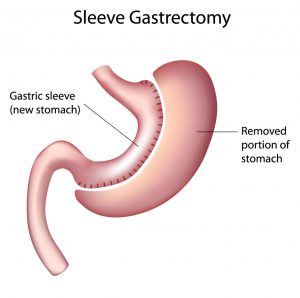
Sleeve gastrectomy is a surgery in which Dr Manoj removes approximately 80% of your stomach. Following the surgery, your stomach will have a vertical sleeve-like appearance and will be able to hold approximately 100 to 150 mL. For most patients, this smaller stomach allows them to fill up more quickly, and dramatically decrease their food intake.
How it’s performed?
Though the procedure may sound rather extreme, it is quite safe and is performed with minimally invasive laparoscopes – small, illuminated tubes that are equipped with a camera and attached to a computer screen. The laparoscopes are inserted through five tiny incisions in the abdomen. Once inside, 80% of the stomach is removed, and Dr Manoj staples together the rest of the tissues to create the vertical sleeve. All nerves and the sphincter muscles are left intact. Although no bypass or postoperative adjustments are needed after a sleeve gastrectomy, for some patients, this surgery is the first step before another procedure such as gastric bypass. Unlike LAP-BAND, sleeve gastrectomy is non-reversible.
What is Gastric Bypass Surgery?
When you eat, food normally travels down your intestine and into your stomach. From there, it enters into your small intestine, where your body absorbs m必利勁
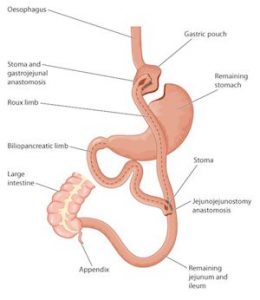
ost of its calories and nutrients. Food moves from the small intestine into the large intestine and is eventually expelled as waste. Gastric bypass greatly reduces the size of your stomach so that you eat less, and food travels more quickly to your small intestine.
How it’s performed?
The surgery involves two steps. In the first part of the procedure, the surgeon will make your stomach smaller, using staples to separate your stomach into a lower pouch and a smaller upper pouch. The upper pouch will be the part that holds food with a capacity of about one ounce. In the second step, the surgeon attaches the jejunum, a part of your small intestine, to the upper portion of your stomach. As a result, food reaches the small intestine much more quickly, and your body absorbs fewer calories. Alternatively, the surgeon can perform a fobi pouch procedure, which achieves long-term results by using a silastic ring to create a smaller stomach pouch.
While gastric bypass can be performed through open surgery, Dr Manoj prefers minimally invasive laparoscopic surgery, using long, thin tubes attached to a camera and a computer monitor. The laparoscopes are inserted through tiny incisions in your abdomen, resulting in a faster and more comfortable recovery.

COLORECTAL SURGERY
Dr Manoj and his team have special expertise in complex reoperative surgeries, revisional pouch operations, and continent ileostomy surgeries. Using laparoscopic, robotic, and open surgical approaches, these experienced surgeons are often uniquely able to maintain or restore continence when other centres are unable to provide such options.
Conditions we treat
- Colon Cancer
- Rectal Cancer
- Polyps
- Diverticulitis and Diverticulosis
- Crohn’s Disease
- Ulcerative Colitis
- Enterocutaneous Fistula
- Anorectal Conditions
- Hemorrhoids
- Fistula
- Anal Fissure
- Rectal Prolapse
- Colonoscopy
- Pelvic Floor Disorders
- Fecal Incontinence
- Constipation
- Pelvic Floor Disorde樂威壯
r

SMALL BOWEL SURGERY
PANCREATIC SURGERY
犀利士

GALL BLADDER AND BILIARY TRACT SURGERY
必利勁

LAPROSCOPIC SURGERY FOR HERNIA
Lorem Ipsum is simply dummy text of the printing and typesetting industry. Lorem Ipsum has been the industry’s standard dummy text ever since the 1500s, when an unknown printer took a galley of type and scrambled it to make a type specimen book. It has survived not only five centuries, but also the leap into electronic typesetting, remaining essentially unchanged. It was popularised in the 1960s with the release of Letraset sheets containing Lorem Ipsum passages, and more recently with desktop publishing software like Aldus PageMaker including versions of Lorem Ipsum.