


Bariatric Surgery
Bariatric Surgery
If you are considered morbidly obese and have tried unsuccessfully to lose weight through diet and exercise, you may feel that your options have run out. You may suffer from conditions related to obesity such as high blood pressure or cholesterol, diabetes, asthma, sleep apnea, or gastroesophageal disease, and you cannot seem to keep these conditions under control. Fortunately, there is hope.
At Renai Medicity, we offer a spectrum of medical endoscopic, surgical, and minimally invasive weight loss procedures with excellent outcomes. The procedures we perform include gastric balloons, gastric sleeve, endoscopic gastric sleeve (accordion procedure), Lap-Band, and gastric plication.
What Is Sleeve Gastrectomy?
Sleeve gastrectomy is a surgery in which Dr Manoj removes approximately 80% of your stomach. Following the surgery, your stomach will have a vertical sleeve-like appearance and will be able to hold approximately 100 to 150 mL. For most patients, this smaller stomach allows them to fill up more quickly, and dramatically decrease their food intake.
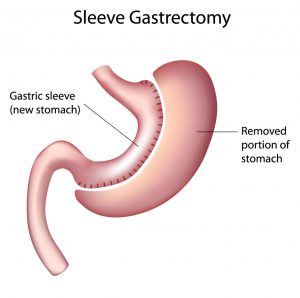
How it’s performed?
Though the procedure may sound rather extreme, it is quite safe and is performed with minimally invasive laparoscopes – small, illuminated tubes that are equipped with a camera and attached to a computer screen. The laparoscopes are inserted through five tiny incisions in the abdomen. Once inside, 80% of the stomach is removed, and Dr Manoj staples together the rest of the tissues to create the vertical sleeve. All nerves and the sphincter muscles are left intact. Although no bypass or postoperative adjustments are needed after a sleeve gastrectomy, for some patients, this surgery is the first step before another procedure such as gastric bypass. Unlike LAP-BAND, sleeve gastrectomy is non-reversible.
What is Gastric Bypass Surgery?
When you eat, food normally travels down your intestine and into your stomach. From there, it enters into your small intestine, where your body absorbs m必利勁
ost of its calories and nutrients. Food moves from the small intestine into the large intestine and is eventually expelled as waste. Gastric bypass greatly reduces the size of your stomach so that you eat less, and food travels more quickly to your small intestine.
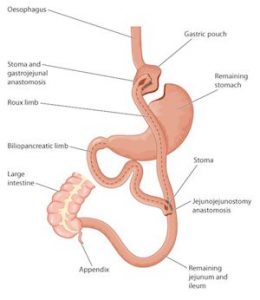
How it’s performed?
The surgery involves two steps. In the first part of the procedure, the surgeon will make your stomach smaller, using staples to separate your stomach into a lower pouch and a smaller upper pouch. The upper pouch will be the part that holds food with a capacity of about one ounce. In the second step, the surgeon attaches the jejunum, a part of your small intestine, to the upper portion of your stomach. As a result, food reaches the small intestine much more quickly, and your body absorbs fewer calories. Alternatively, the surgeon can perform a fobi pouch procedure, which achieves long-term results by using a silastic ring to create a smaller stomach pouch.
While gastric bypass can be performed through open surgery, Dr Manoj prefers minimally invasive laparoscopic surgery, using long, thin tubes attached to a camera and a computer monitor. The laparoscopes are inserted through tiny incisions in your abdomen, resulting in a faster and more comfortable recovery.
latest news
Own best video award.
40th National Conference of the Association of Colon & Rectal Surgeons of India
read more
Received fellowship in liver transplantation.
Received fellowship in liver transplantation.
read more
Received best e-video award.
26th Annual Conference of Indian Association of Surgical Gastroenterology.
read more